

Blog
October 28, 2025
Quality Standards

In global agricultural commodity trade, quality standards and traceability systems are non-negotiable requirements for market access, food safety compliance, and customer trust. Understanding and implementing these standards can seem daunting, but they represent the foundation of professional agricultural commerce. This comprehensive guide demystifies quality standards and traceability requirements, explaining what they mean, why they matter, and how to implement them effectively in your agricultural business operations.
Quality standards serve multiple critical functions in agricultural supply chains. First and foremost, they protect consumer health and safety by establishing requirements that prevent contamination, adulteration, and food safety hazards. When properly implemented, quality standards prevent foodborne illness outbreaks that can devastate businesses and harm consumers.
Second, quality standards enable international trade by providing common frameworks that buyers and sellers across borders can reference. When an Indian exporter certifies products meet ISO 22000 standards, buyers in Europe or North America understand exactly what quality management systems are in place. This standardization facilitates trust and trade efficiency.
Third, quality certifications differentiate businesses in competitive markets. Certified operations can access premium markets, command better pricing, and build reputations as quality-focused professionals. In commodity markets where products are often similar, quality certifications provide meaningful competitive advantages.
ISO 22000 - Food Safety Management: This comprehensive standard specifies requirements for food safety management systems. It combines HACCP principles with prerequisite programs and management system requirements. ISO 22000 certification demonstrates that your organization has implemented systematic controls to identify and manage food safety hazards throughout operations.
The standard covers interactive communication throughout the supply chain, system management ensuring adequate resources and documented procedures, prerequisite programs establishing basic operational conditions, and HACCP principles for identifying and controlling specific hazards. Organizations achieving ISO 22000 certification demonstrate commitment to food safety at the highest international level.
HACCP - Hazard Analysis and Critical Control Points: HACCP represents a systematic preventive approach to food safety addressing biological, chemical, and physical hazards. Rather than relying on end-product testing, HACCP prevents hazards from entering food production in the first place through seven key principles.
These principles include conducting hazard analysis to identify potential safety issues, determining critical control points where hazards can be prevented or controlled, establishing critical limits for each control point, monitoring procedures to ensure control points remain within limits, corrective actions when monitoring indicates loss of control, verification procedures confirming the system works effectively, and documentation and record-keeping demonstrating compliance.
ISO 9001 - Quality Management Systems: While not food-specific, ISO 9001 provides a framework for overall quality management applicable to agricultural businesses. This standard emphasizes customer focus, leadership commitment, engagement of people, process approach, continuous improvement, evidence-based decision making, and relationship management with suppliers and partners.
Many agricultural businesses implement both ISO 9001 (for general quality management) and ISO 22000 (for food safety specifics), creating comprehensive quality systems addressing all aspects of operations.
BRC Global Standards: The British Retail Consortium developed these standards widely recognized by international retailers and food service operators. BRC certification demonstrates compliance with rigorous requirements for food safety, quality, and operational criteria. Many major retailers worldwide require suppliers to hold BRC certification.
FSSC 22000: The Food Safety System Certification 22000 combines ISO 22000, prerequisite program requirements, and additional FSSC requirements into a complete food safety system. FSSC 22000 certification is recognized by the Global Food Safety Initiative (GFSI), making it accepted by major food companies globally.
FSSAI (Food Safety and Standards Authority of India): All food businesses operating in India require appropriate FSSAI licenses or registrations. FSSAI establishes standards for food products, regulates manufacturing and storage, ensures proper labeling, and enforces food safety compliance. Understanding which FSSAI license level you need—basic registration, state license, or central license—is essential for legal operation.
EU Regulations: Exporting to European Union markets requires compliance with EU food safety regulations including general food law requirements, specific hygiene regulations, contaminant limits (aflatoxins, pesticides, heavy metals), and import conditions for products of plant origin. EU regulations are among the world's most stringent, requiring careful attention to detail.
USDA and FDA (United States): US market access requires compliance with USDA and FDA regulations depending on product type. Requirements include inspection and certification for certain products, proper labeling meeting US standards, compliance with maximum residue levels, and bioterrorism registration for facilities shipping to the US.
Organic Certifications: Organic products require certification from recognized bodies. Major organic standards include USDA Organic (for US markets), EU Organic Regulation (for European markets), NPOP (National Programme for Organic Production - India's organic certification), and private standards like Naturland or Demeter. Organic certification requires complete supply chain integrity with documented traceability and separation from conventional products.
Traceability—the ability to track food products through all stages of production, processing, and distribution—has become mandatory in most developed markets and increasingly important globally. Effective traceability serves multiple purposes including rapid recall execution when safety issues emerge, verification of origin claims and certifications, supply chain transparency for consumers and regulators, and fraud prevention through documented chains of custody.
One Step Back, One Step Forward: The fundamental principle of food traceability requires businesses to know where products came from (one step back in the supply chain) and where they went (one step forward). This means maintaining records of all suppliers who provide inputs and all customers who receive products, with documentation linking received inputs to shipped outputs.
Batch and Lot Control: Effective traceability requires assigning unique identifiers to product batches throughout the supply chain. When you receive raw materials, record their batch numbers. When you process products, document which input batches contributed to which output batches. When you ship products, record which batches are in each shipment. This batch-level tracking enables precise recalls affecting only specific batches rather than all products.
Documentation Requirements: Traceability systems require comprehensive documentation including supplier information and qualification records, receiving records for all inputs with batch numbers and dates, processing records linking inputs to outputs, quality testing results tied to specific batches, storage records showing location and conditions, shipping records documenting where products went, and customer information for the next supply chain step.
Quality management requires systematic laboratory testing to verify compliance with standards and specifications. Key testing parameters for agricultural commodities include microbiological safety testing for pathogens like salmonella, E. coli, and listeria, chemical testing for mycotoxins (especially aflatoxins in nuts), pesticide residue analysis, heavy metal testing (lead, cadmium, arsenic), physical parameters like moisture content and foreign matter, and nutritional analysis when relevant for labeling.
Accredited laboratories using validated test methods provide reliable, defensible results. International accreditation standards like ISO/IEC 17025 ensure laboratory competence. When selecting laboratories, verify their accreditation scope covers the specific tests you require.
Sampling Procedures: Proper sampling is critical for test result validity. Random sampling from throughout shipments, adequate sample sizes representative of the lot, proper sample handling to prevent contamination or degradation, and chain of custody documentation tracking samples from collection through testing all contribute to reliable results.
Step 1 - Gap Analysis: Begin by assessing current practices against chosen standard requirements. Identify gaps between current state and standard requirements, prioritize gaps based on risk and regulatory importance, and develop action plans addressing each gap.
Step 2 - Documentation Development: Quality systems require documented procedures including quality policy statements, documented procedures for critical processes, work instructions for specific tasks, and forms and records templates for documentation.
Step 3 - Training and Implementation: Staff training ensures everyone understands quality requirements and their roles. Initial training introduces quality system concepts and requirements. Ongoing training maintains competence and addresses new procedures. Training records document who was trained, on what topics, and when.
Step 4 - Internal Audits: Regular internal audits verify that quality systems operate as intended. Qualified auditors review procedures, check records, observe practices, identify non-conformities, and recommend improvements. Internal audits prepare organizations for external certification audits.
Step 5 - Certification Audit: Accredited certification bodies conduct external audits to verify compliance with standards. Stage one audits review documentation readiness. Stage two audits assess implementation effectiveness. Successful audits result in certification valid for three years with annual surveillance audits.
Choose certification bodies carefully to ensure certificate validity and market acceptance. Accredited certification bodies have been assessed by national accreditation agencies confirming their competence. In India, the National Accreditation Board for Certification Bodies (NABCB) accredits organizations to issue certifications.
International accreditation through bodies like the International Accreditation Forum (IAF) ensures global recognition. When selecting certification bodies, verify their accreditation status, scope of accreditation covering your industry, reputation and market acceptance, and cost and service quality.
Achieving certification is just the beginning. Maintaining certifications requires ongoing commitment through annual surveillance audits by certification bodies, internal audits ensuring continued compliance, management reviews assessing system effectiveness, corrective actions addressing non-conformities, and preventive actions eliminating potential problems before they occur.
Effective quality management embraces continuous improvement philosophy. Regular reviews identify opportunities to improve processes, reduce waste, enhance efficiency, and strengthen quality outcomes. Quality metrics track performance trends, highlighting successes and areas requiring attention.
Modern digital platforms simplify quality and traceability management through centralized document management storing all quality records, certifications, and test reports accessibly, automated compliance tracking with alerts for expiring certifications or scheduled audits, digital batch tracking throughout supply chain stages, quality data analytics identifying trends and improvement opportunities, and mobile applications enabling field data capture in real-time.
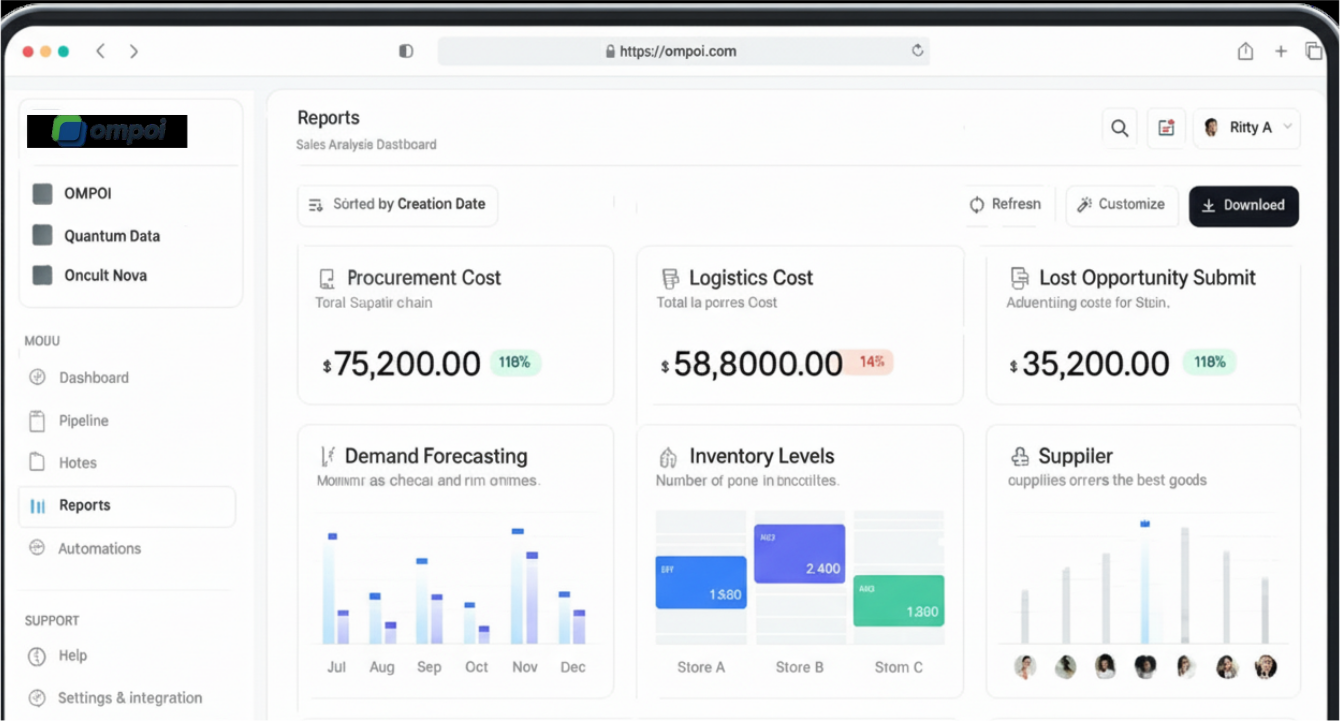
OMPOI's platform integrates quality management features supporting supplier certification tracking, laboratory test result management, batch traceability throughout transactions, and document management for all quality records. This integration ensures quality management supports rather than burdens business operations.
Quality certifications require investment in certification body fees, consulting support if needed, training for staff, documentation development, and audit preparation. However, benefits typically far exceed costs through market access to premium customers requiring certifications, price premiums for certified products, reduced rejection rates and quality problems, improved operational efficiency through systematic management, enhanced reputation and customer trust, and risk mitigation preventing costly safety incidents.
Many businesses report certification costs recovering within 12-18 months through improved market access and pricing while ongoing benefits continue indefinitely.
Documentation Burden: Businesses sometimes view quality documentation as excessive paperwork. Overcome this by streamlining procedures to essential requirements, using templates and forms for consistency, implementing digital documentation systems reducing paper, and training staff on efficient documentation practices.
Resource Constraints: Small businesses worry about resource requirements for quality systems. Address this through phased implementation starting with essential elements, utilizing consultant support for system development, leveraging digital tools reducing manual effort, and recognizing that quality systems ultimately save resources by preventing problems.
Staff Resistance: Change resistance occurs when staff view quality systems as burdensome. Counter resistance by clearly communicating benefits to the organization and individuals, involving staff in system development, providing adequate training, and recognizing and rewarding quality-focused behaviors.
Blockchain Technology: Blockchain creates immutable, transparent records ideal for traceability. Early adopter companies use blockchain to document product journeys from farm to consumer, providing verifiable provenance information. As blockchain technology matures, it will likely become standard for traceability in premium agricultural products.
DNA Testing: Advanced DNA testing enables verification of product origins and variety authentication. This technology prevents fraud while providing definitive verification of authenticity claims.
IoT Sensors: Internet-of-Things sensors continuously monitor storage conditions, transportation environments, and processing parameters. This real-time monitoring generates objective quality records while enabling proactive problem prevention.
AI-Powered Quality Control: Artificial intelligence applied to quality control can predict potential issues before they occur, optimize testing strategies for cost-effectiveness, identify subtle quality degradation patterns, and recommend process improvements based on quality data analysis.
Quality standards and traceability systems represent foundational requirements for professional agricultural commodity businesses. While implementation requires commitment and resources, the benefits—market access, customer trust, operational excellence, risk mitigation, competitive differentiation—far exceed the investment. In increasingly quality-conscious global markets, certifications and traceability aren't optional add-ons but essential business infrastructure.
Start with clear objectives identifying which certifications and standards align with your target markets and business goals. Progress systematically through gap analysis, system development, staff training, and certification pursuit. View quality management as an ongoing journey of continuous improvement rather than a one-time compliance exercise.
Ready to implement world-class quality and traceability systems in your agricultural business? Discover how OMPOI's integrated platform supports quality management through certification tracking, document management, batch traceability, and supplier verification—making quality excellence practical and sustainable.






Manage certifications, traceability, and quality documentation with OMPOI's integrated platform.